HSA Technical Guide for Accountants and Bookkeepers
Canadian HSAs differ fundamentally from U.S. accounts under different tax law.

A Canadian Health Spending Account is a specific CRA-recognized arrangement in which a business pays an employee's eligible medical expenses as a non-taxable benefit, distinct from a savings account, an investment vehicle, or anything under IRC Section 223. That distinction matters because so many practitioners come to this topic already holding a mental model built for a different country's tax code.
The US HSA framework comes loaded with rules that have no place in a Canadian file: HDHP enrollment requirements, IRS annual contribution limits, Form 8889, the triple tax advantage of deductible contributions, tax-free growth, and tax-free qualified withdrawals. None of it applies north of the border. A practitioner who carries those assumptions into a conversation with a Canadian client will hand out guidance that's simply wrong, not close enough to be useful with a caveat.
The governing authority here isn't a piece of consumer-facing legislation with yearly limit announcements the way the IRS publishes each fall. The governing authority is subsection 248(1) of the Income Tax Act, which provides the legislative definition of PHSPs, together with CRA interpretation bulletins IT-339R2 and IT-85R2. Those documents, not a press release about next year's contribution ceiling, are what a Canadian HSA answers to.
The stakes for getting this wrong are concrete. An accountant who treats a compliant HSA reimbursement as taxable employment income creates a tax problem where none existed, and an accountant who fails to flag a plan that doesn't actually qualify creates one that's about to arrive. Either mistake costs the client money and costs the practitioner the credibility that got them hired in the first place. The rest of this guide builds the correct framework from the ground up, starting with the one classification everything else depends on.
A|The Canadian HSA and the PHSP Classification
Every tax benefit a Canadian HSA offers rests on one qualification: it has to meet CRA's definition of a Private Health Services Plan. That means an employer-funded arrangement that reimburses employees for eligible medical expenses, where the business bears the cost and the benefit reaches the employee tax-free. Missing that classification collapses the whole structure into something else, usually a taxable benefit or a shareholder distribution in disguise.
The mechanics of a compliant PHSP work as follows. Reimbursements paid under the plan aren't a taxable benefit to the employee under paragraph 6(1)(a) of the Income Tax Act. The employer, in turn, deducts those reimbursements and any administration fees as ordinary business expenses. The employee contributes nothing out of pocket to earn this tax treatment: there's no personal account, no investment component, no balance accumulating interest anywhere.
What makes the plan a PHSP and not something else. The plan has to be established primarily for arm's-length employees, though a sole shareholder-employee of a corporation can be covered when the benefit arises from employment rather than from ownership. The benefits paid have to qualify as medical expenses under section 118.2 of the Income Tax Act, the same provision governing the medical expense tax credit on a personal return. And the arrangement can't function as disguised salary or a shareholder benefit wearing a health plan's clothing. Get those three right, and the classification holds. Get one wrong, and the file is exposed the moment CRA looks at it.
A|Eligibility and the Incorporated Professional
Coverage for arm's-length employees is the easy part of this analysis. Any employee of the business qualifies, and their dependants can be included for eligible expenses. Most client files never generate a question here.
The harder question, and the one responsible for most compliance failures, involves the incorporated professional who is also the company's sole employee. CRA's technical interpretations from 2014 and 2022 signal real skepticism toward a self-insured plan covering only a sole shareholder, on the reasoning that such an arrangement lacks the element of insurance a PHSP requires. CRA objects to arrangements that don't function as genuine employment benefits, not to the concept of an owner using an HSA. It's insisting that the arrangement function as a genuine employment benefit rather than as a channel for flowing personal medical bills through the corporation tax-free without a real employer-employee relationship behind it.
IT-339R2 sets out what qualifies as a private health services plan, and CRA's related interpretations draw a hard line between a bona fide employment relationship and a situation where the "employee" is functionally the owner pulling funds out of the company. Crossing that line brings a specific reassessment risk: the payments get treated as a shareholder benefit under subsection 15(1), fully taxable to the recipient and not deductible to the corporation. That's a double loss, tax owing on money the client thought was tax-free, plus a deduction the corporation can no longer claim.
None of this means incorporated professionals should avoid HSAs. Many use them legitimately and well. The risk sits in structure and paperwork, not in the fact of ownership itself, and a sole shareholder with no other employees on staff is simply the profile that draws the closest look. Dependant coverage adds a second wrinkle for clients. A plan can reimburse expenses for an employee's spouse and dependants, and this is a common, entirely legitimate feature, but every expense claimed still has to qualify under section 118.2, regardless of whose name is on the receipt.
Most CRA challenges to Canadian HSA arrangements come down to one of three categories: the plan is not a genuine employment benefit, the claimed expenses are not eligible, or the plan was not in place before the expenses were incurred. Clients sometimes try to cover a family member who doesn't meet the Income Tax Act's definition of a dependant. Some attempt to route a contractor through the plan, when HSA coverage flows through employment relationships, not contract relationships. And an unincorporated sole proprietor or partnership will occasionally try to run a corporate-style HSA structure without having actually incorporated, a substitution that doesn't hold up because the tax treatment differs by entity type.
How Contributions and Spending Limits Work
CRA publishes no annual maximum contribution figure for Canadian Health Spending Accounts, full stop. The employer sets the spending limit inside the plan document, and there's no government ceiling to check the number against. That absence throws a lot of practitioners who assume every tax-advantaged health arrangement must come with a published dollar cap somewhere.
No cap doesn't mean no constraint, though. The limiting factor is reasonableness, tested against consistency and against the arm's-length relationship the plan depends on for its classification. For a business with several employees, benefit levels ought to line up across a comparable class of workers. Seniority, full-time versus part-time status, or role can justify different limits between employees, but a gap with no defensible rationale behind it draws exactly the kind of attention a compliant plan is built to avoid.
For an owner-employee, the standard tightens further. A shareholder-employee's spending limit has to be reasonable in light of the actual employment relationship and compensation level; assigning themselves an unlimited spending allowance while everyone else on payroll gets a fixed number is an asymmetry that invites a second look.
The plan works on an annual cycle at the mechanical level. The employer sets a maximum reimbursement amount per employee, or per class of employee, at the start of the plan year. Employees submit claims against that ceiling throughout the year. Whatever goes unclaimed doesn't flow back to the employee as cash and isn't taxable, it simply stays with the employer as unused budget. There's no employee-owned account building an investment balance behind any of this: the number on the plan document is an employer commitment for the year, not an asset that belongs to the worker.
What expenses qualify under section 118.2 and the common misunderstandings about CRA's eligible expense list
Eligible expenses under a Canadian HSA come from section 118.2(2) of the Income Tax Act, the same list that governs the medical expense tax credit on a personal return. Most practitioners already know this list from T1 season, which makes it one of the more approachable pieces of the whole framework once the connection clicks.
The core categories are familiar territory: prescription drugs prescribed by a licensed practitioner and dispensed by a registered pharmacist, dental care from routine cleanings through orthodontics, vision correction including laser surgery, and hospital or lab fees that provincial health insurance doesn't cover. Paramedical services count too, physiotherapy, chiropractic care, psychology, speech therapy, provided the practitioner holds the right recognition and license for their province, since licensing categories shift from one province to the next.
Client confusion tends to cluster around a short list of exclusions. Gym memberships, general wellness programs, vitamins, and supplements sit outside the eligible list entirely, no matter how often clients ask about routing them through the plan. Over-the-counter medication is generally excluded unless a practitioner prescribed it. Cosmetic procedures fall outside eligibility as well, unless the procedure serves a medical or reconstructive purpose under subsection 118.2(2.1). Medical travel can qualify in narrow circumstances tied to distance and the absence of local treatment, but the documentation bar sits high enough that these claims deserve extra scrutiny before they go through.
None of this puts the practitioner in the position of adjudicating individual claims: that's the plan administrator's job. The value an accountant adds here is making sure the client understands the actual boundary of the plan before they promise employees something the plan was never built to cover.
How claims are submitted, reviewed, and reimbursed, and the documentation the plan must maintain
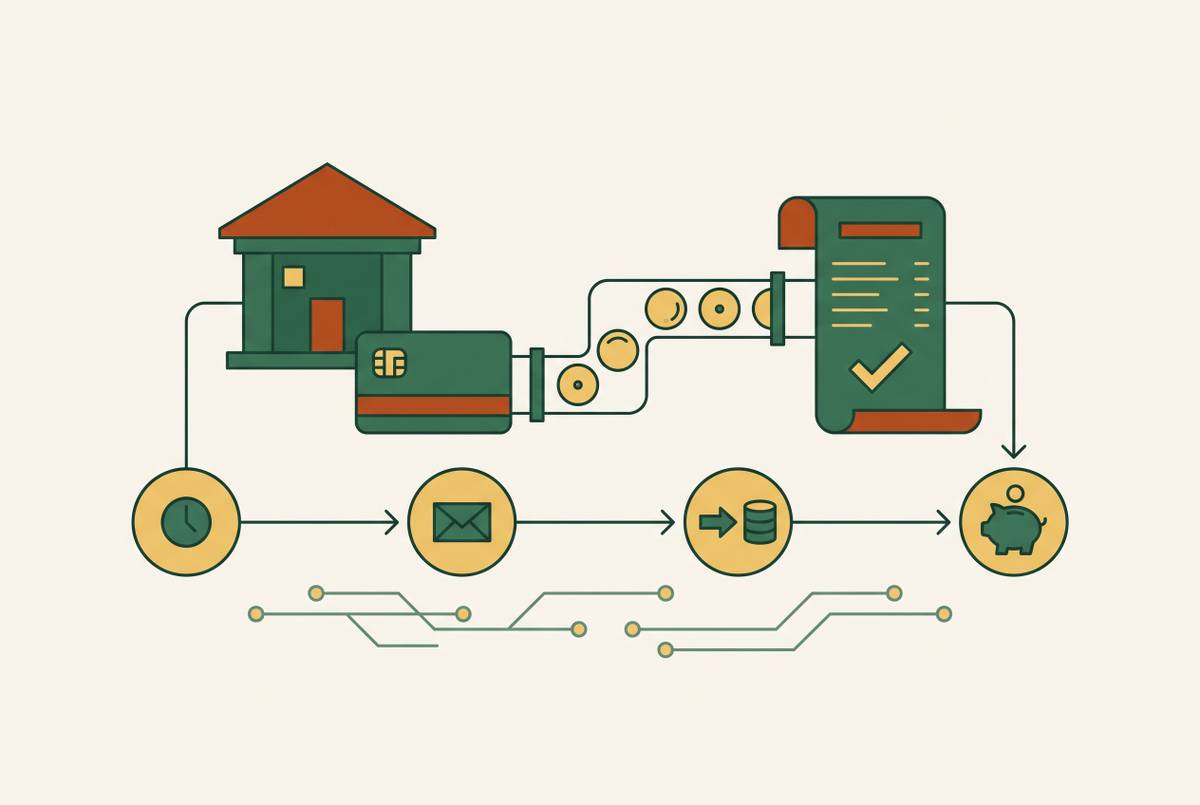
A compliant claim runs in a fixed order: the employee submits documentation for an eligible expense incurred after the plan's effective date, and the administrator verifies eligibility before any money moves. That sequence isn't a suggestion. CRA compliance depends on it running in that order every time.
Documentation has to identify the provider, the service or product involved, the date, and the amount paid. For prescription drugs, the pharmacy receipt showing the drug name and DIN number is standard. Paramedical claims need a receipt from a licensed practitioner showing their credentials or registration number for the province they practice in. And expenses incurred before the plan's effective date can't be claimed retroactively under any circumstance, a hard rule rather than a matter of interpretation.
On the reimbursement side, the administrator approves the claim, pays the employee (usually by direct deposit), and records the transaction. That payment does not run through payroll, is not subject to CPP or EI deductions, and does not show up on the T4 as employment income when the plan is compliant. The employer then reimburses the administrator for the amount paid out, plus whatever administration fee applies, and both figures are deductible business expenses.
A file review should check a short list of things. Are claims getting approved without the receipts and documentation to back them up? That's the single most common gap. Are reimbursements moving through payroll instead of as separate business payments? And is the administration fee tracked separately from reimbursement totals, even though both are deductible? A plan that fails any of these checks isn't necessarily fraudulent, but it's operating with a paper trail that won't hold up if CRA asks questions.
Tax Reporting Obligations for Employer and Employee
A compliant PHSP produces a T4 with nothing on it related to the HSA at all. No box, no code, no line item. That invisibility is the marker of a plan working exactly as it should, which is a strange thing to say out loud but useful to remember when reviewing a client's payroll setup: absence of a reporting line here is the correct outcome, not an oversight to fix.
The correction path matters just as much as the normal path. If a plan is reassessed as non-compliant, for instance a shareholder benefit situation gone wrong, CRA may require those reimbursements to be reported as a correction, in Box 40, Other Benefits. Practitioners advising clients with cross-border ties should also know that the US W-2's Box 12 Code W, used for reporting employer HSA contributions, has no Canadian counterpart, and this concept should not be imported when advising Canadian clients.
On the employer side, total reimbursements and administration fees get deducted as business expenses, either on the corporate return (T2) or as business income on a personal return (T1) for unincorporated businesses, subject to the conditions in section 20.01 of the Income Tax Act. The plan administrator usually issues an annual report to the employer, and year-end review should reconcile that report against the deduction claimed on the return.
Common T4 and return errors practitioners must catch. An employer sometimes codes HSA reimbursements as a taxable benefit on the T4 by mistake, which forces the employee to pay income tax on money that should have been tax-free, and fixing it means filing a T4 amendment after the fact. And reimbursements paid to someone who was never actually eligible, a contractor or a family member who doesn't meet the dependant test, aren't deductible to the employer and aren't tax-free to the recipient either. Catching either error before filing saves a client an amendment process that's entirely avoidable.
The compliance pitfalls that most commonly trigger CRA scrutiny and how to spot them in a client file before they become problems
Nearly every CRA challenge to a Canadian HSA traces back to one of three failures: the arrangement isn't a genuine employment benefit, the expenses claimed don't actually qualify, or the plan wasn't in place before the expenses it's reimbursing were incurred. Everything covered in this guide, the PHSP classification, the shareholder-employee risk, the section 118.2 boundary, the claim sequencing, funnels into one of those three categories when CRA opens a file.
The timing failure deserves its own callout because it's so easy to catch and so often missed. A plan established after the expense it's meant to cover was already incurred is one of the most common errors in this space, and one of the simplest to spot in a file review. CRA's position is unambiguous here: the plan has to exist before the expense happens, not merely before the claim gets submitted. The practical stakes: an accountant who incorrectly treats HSA reimbursements as taxable employment income, or who fails to flag a non-compliant plan structure to a client, creates both a tax liability and a loss of trust.
A practitioner reviewing a client's HSA setup should treat these three failure points as a standing checklist rather than a one-time assessment done at plan setup. Ownership structure changes. Employees come and go. Expense categories that seemed clearly eligible one year get tested by a client request the next. Revisiting who's covered under the PHSP and the sequencing of plan versus expense at each year-end review catches most of what would otherwise surface as a reassessment two or three years down the line.
Sources
- Health Spending Account Canada: Setup, CRA Rules & FAQs - PurposeCPA
- Health Spending Account Rules in Canada (2025): Employers’ Guide - Newsrooms
- CRA Compliance for Health Spending Accounts in Canada
- Ultimate Guide to Health Spending Accounts for Tax Accountants in Canada
- How Health Spending Accounts Work in Canada
- HSA in Canada: An Overview of Health Spending Accounts
- The Health Savings Account in a Canada-U.S. Context - Cardinal Point Wealth Management
- TaxTips.ca - Small Business - Private Health Services Plans (PHSPs) and Health Spending Accounts (HSAs)